
April 23, 2026
By Adam Ruffner
Here we are on the precipice of the 2026 UFA season. Another noisy offseason has come and gone, and now it’s time to test the hype and see who can challenge Boston on their throne. There’s a handful of favorites, but like last year, the championship contender field could go 10 or more teams deep.
Rundown of the offseason
-
The reigning champion Boston Glory signed former DC stars Rowan McDonnell and Thomas Edmonds, giving the team three MVPs (McDonnell, Tobe Decraene, and Jeff Babbitt) on their active roster.
-
The New York Empire restocked in a big way with the additions of Alex Atkins and reigning “Rookie Of The Year” and MVP finalist Daan De Marrée, as well as a handful of impactful vets like Alex Davis, Braden Eberhard, and Elliott Moore.
-
The Indianapolis AlleyCats underwent the most extensive roster makeover perhaps in league history. They brought in four new elite defenders (Xavier Payne, William Wettengel, James Pollard, Nate Little), returned franchise legends Cameron Brock and Keegan North, while also giving a spot to one of the most interesting throwing prospects in years (Jake Felton, who has the most assists in the UFA over the past two seasons).
-
The Minnesota Wind Chill acquired massive athletic talents (Lukas Ambrose, Noah Coolman, Nathan De Morgan) while losing almost no starters from last year’s runner-up squad.
-
Two championship-caliber teams—the Oakland Spiders and Carolina Flyers—that had less-than-desirable finishes to their 2025 campaigns have added major collegiate stars. The Flyers return homegrown ace Tobias Brooks, and signed speed freak receiver Zeke Thoreson. Oakland, meanwhile, brought on 2026 Callahan finalist Anton Orme and Dylan Villeneuve, two blue chippers who will likely announce their pro careers with big plays.
-
The Detroit Mechanix and Los Angeles Aviators will not be returning to play in 2026, reducing the total number of UFA teams to 22 at current count.
-
The league data models and stats continue to move quicker and further into the future, thanks to the new tools and information provided by Shown Space.
-
All roads lead back to Madison, WI for 2026 UFA Championship Weekend on August 27-28. It’s also Round 2 of the super exciting PUL/WUL All-Star Game.
I think that about covers the big stuff. Let’s move onto breakdowns by team and division.
-
Central Division - Chicago, Indianapolis, Madison, Minnesota, Pittsburgh
-
East Division - Boston, DC, Montreal, New York, Philadelphia, Toronto
-
South Division - Atlanta, Austin, Carolina, Houston, San Diego, Vegas
-
West Division - Colorado, Oakland, Oregon, Salt Lake, Seattle
Central Division
2025 playoff teams: Chicago, Minnesota, Madison
Last three division champions: Minnesota (2023), Minnesota (2024), Minnesota (2025)
Last league champion: Minnesota (2024)
2026 Favorite: Minnesota
2026 Wild Card: Indianapolis
One Big Divisional Trait: Defense has long crowned winners in the Central, and last season the three teams that held opponents to the lowest offensive success rates in the league (Chicago, Minnesota, and Madison) all hailed from the midlands. Minnesota got even better through free agency and might have a legendary coverage unit in 2026, while Indianapolis—a cellar dweller the past few years defensively—will surely rocket upwards with their own new crop of star-level defensive additions.
One Big Storyline: The Wind Chill occupy the divisional throne, but it remains to be seen who their next challengers could be. Indianapolis grabbed headlines all offseason with their roster moves, but they still have to prove they’re not just paper ‘Cats. Chicago experienced an exodus of starting level talent, but their perennial playoff core remains intact. Madison’s defense allowed the sixth fewest goals per game last season and is as deep as ever, but until the offense improves their success rate (seventh worst in 2025) the Radicals will struggle to separate from mediocrity.
Chicago Union
Strength of schedule: 15th
Biggest bright spot: Defensive consistency
Even with major roster turnover and lowered expectations following last year’s perfect regular season run, this Chicago defense still has a lot of teeth to it. Jake Rubin-Miller and Jace Bruner have the speed and instincts to cause a lot of chaos in the lanes and on short range throws, while former Pittsburgh products and Union newcomers Charlie Vukovic and Mikey O'Brien provide some size and stoutness to coverage. Chicago has finished top seven in break rate for five straight seasons, and will likely get back to the playoffs if they make it an eighth.
Biggest question: What will the offensive lineup look like week to week?
With the Union’s top four volume throwers from last year gone, there’s a lot of holes to plug in the backfield. Pawel Janas spent 2025 primarily on the D-line for the first time in his career, but the league’s all-time leading passer will presumably be shifting back into his pocket thrower role for the Union offense. Benjamin Preiss and Wilson Matthews have been productive in their receiver roles, and Jack Shanahan still remains one of the most dangerous continuation throwers around. But beyond the team vets, Chicago will need a new player to step up in 2026 if they want to compete for another divisional title.
One Big Team Stat: Last year the Union became the first team in league history to go undefeated during the regular season and not qualify for Championship Weekend.
Three big games to watch: May 2 at Minnesota, May 29 at Indianapolis (Friday Night Frisbee), July 10 vs New York (Friday Night Frisbee)
Indianapolis AlleyCats
Strength of schedule: 1st (Hardest)
Biggest bright spot: New defensive additions
Even though there are some analytics out there saying that Indy’s extensive offensive upgrades are the best ever, what really makes the ‘Cats contenders are their D-line signings. Will Wettengel, Nate Little, and Xavier Payne all were selected to All Defense squads last season, and all bring specific tools as defenders; the 21-year-old Wettengel is one of the best defensive prospects in years, and already has 43 blocks in his first 29 games as a pro; Little along with Wettengel and other new addition James Pollard gives the AlleyCats the best lineup of big defenders in the division; Payne’s specialist skills as a puller and thrower on the counterattack make him one of the most valuable D-line pieces in the UFA.
Biggest question: Will all the new pieces fit?
Indy is going all-in on a championship in 2026 with their top-down roster reconstruction and new coaching staff, and it still might not be enough to even make the playoffs, let alone win the division. The AlleyCats have to assemble quickly before they face the league’s toughest schedule, and their overhauled offense must hit the ground running against elite defenses from Chicago, Madison, and especially Minnesota; Indy’s first nine games are against those three Central rival teams.
One Big Team Stat: In 2025, Indianapolis finished with 20 or more turnovers in 10 of their 12 games, with the other two contests falling just shy at 19 turnovers in each.
Three big games to watch: May 9 vs Madison, May 15 vs Minnesota, May 29 vs Chicago (Friday Night Frisbee)
Madison Radicals
Strength of schedule: 4th
Biggest bright spot: Retooled offense
The backfield throwing duo of Kainoa Chun-Moy and Eric Sjostrom settled into a nice rhythm during the second half of 2025, with the latter rating as one of the better disc movers in the league according to advanced stats. Offensive inconsistencies have plagued the Radicals for years—Madison has registered just one top 10 offense (10th, 2023) in the past six seasons, and last year they had the worst O-line rating of any of the 12 playoff teams—and the Chun-Moy/Sjostrom backfield could solve some of those problems. Both passers can take on a high workload, shoot from range (Sjostrom was 12-of-13 on hucks last season), and play with the kind of pace that is essential to succeed in a division that thrives on defensive traps and double team coverages.
Biggest question: Who will step up alongside Anthony Gutowsky as a finisher?
The 2025 league leader in goals is a matchup nightmare in one-on-one scenarios. But without another standout target on the O-line, opposing defenses can often key in on Gutowsky and stymie the Madison attack during crucial points. There’s a handful of players that have shown sparks—Nico Ranabhat, Gabe Vordick, and Max Sample to name a few—but the Radicals will need to develop another receiving target if they want to stay in the playoff hunt in a crowded Central Division race.
One Big Team Stat: For a franchise that has the second most postseason wins in league history behind the New York Empire, the Radicals have won just one playoff game since 2018.
Three big games to watch: May 9 at Indianapolis, May 31 vs Minnesota, June 18 vs Salt Lake (Friday Night Frisbee, special Thursday night edition)
Minnesota Wind Chill
Strength of schedule: 2nd
Biggest bright spot: Playmaking
The league’s best defense got even better over the winter, fittingly, and added twin jets Noah Coolman and Lukas Ambrose. This Wind Chill roster already featured Justin Burnett, Noah Hanson, Thomas Shope, Bryan Vohnoutka, and Paul Krenik as big highlight producers, all of whom contributed statement plays at last summer’s Championship Weekend event. Throw in college star and first-year Wind Chill member Nathan De Morgan, and this lineup could go off like fireworks on a weekly basis.
Biggest question: Will four straight seasons of deep playoff runs finally catch up?
The Wind Chill have entered some truly rarefied air in recent years with their successes: Three straight division titles, a 2024 UFA championship, and back-to-back title game appearances. Minnesota has thwarted the negative effects of an aging core and mounting expectations so far, but their upcoming schedule could potentially turn this team from battle tested into bruised and battered by mid-July.
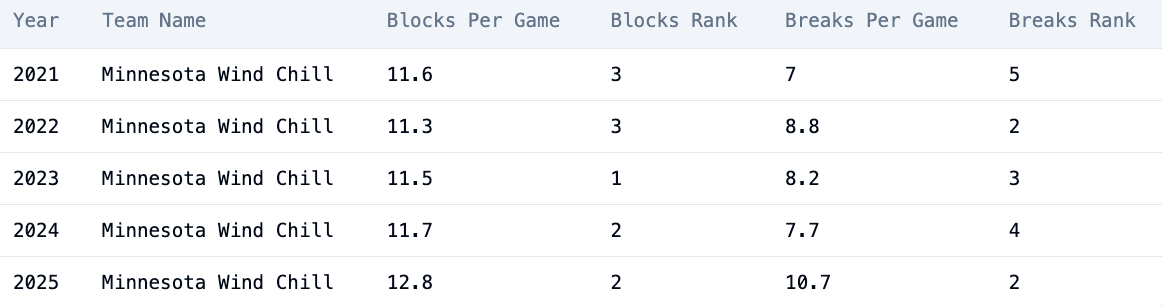
One Big Team Stat: The Wind Chill defense has ranked top five in blocks per game and break scores per game every season since 2021.
Three big games to watch: May 2 vs Chicago, June 12 at Oakland (Friday Night Frisbee), June 19 vs Salt Lake (Friday Night Frisbee)
Pittsburgh Thunderbirds
Strength of schedule: 8th
Biggest bright spot: A full offseason to get healthy
Through a series of overlapping injuries, zero Thunderbirds players managed to make the field for all 12 of their games in 2025, and only four were active for 10 or more games. Franchise leader and the league’s number two all-time in completions Jonathan Mast is gone to divisional rival Indy, which means a new era for Pittsburgh’s throwing corps headlined by the promising Will Hoffenkamp.
Biggest question: Who is playing defense?
Anson Reppermund is still playing efficiently into his mid-30s, and can switch over in coverage when needed. But the UFA’s fifth all-time block getter hasn’t had a primary defensive role in several seasons, and it’s been over two years since the last Pittsburgh D-line starter registered 10 or more blocks.
One Big Team Stat: Opponents averaged the fifth most breaks per game (9.8) against Pittsburgh in 2025.
Three big games to watch: May 10 vs Montreal, May 30 at Philadelphia, July 17 vs Indianapolis
East Division
2025 playoff teams: Boston, DC, New York
Last three division champions: New York (2023), DC (2024), Boston (2025)
Last league champion: Boston (2025)
2026 Favorite: Boston
2026 Wild Card: Montreal
One Big Divisional Trait: If you want to make the playoffs in the East, you have to be top five in fewest turnovers. Simple. Boston (2nd), DC (4th), and New York (5th) are perennial championship contenders because they commit so few self-inflicted errors.
One Big Storyline: Rowan McDonnell’s signing on Tuesday gives Boston their own “Three Kings”, joining fellow MVP/Champions Tobe Decraene and Jeff Babbitt. The Glory’s path to a repeat is going to be a gauntlet, though, as rival New York is back at “Super Team” status with their own haul of Alex Atkins and Daan De Marrée, while DC will be out for revenge with a still extremely talented roster. And that’s just the teams at the top! The East remains the toughest, deepest division in the association, and 2026 could finally be the year one of the titans at the top of the standings takes a tumble.
Boston Glory
Strength of schedule: 17th
Biggest bright spot: Possession kings
After they finished second last season in fewest turnovers per game, Boston pilfered former DC stars Rowan McDonnell and Thomas Edmonds to bring even more throwing talent to a deep O-line rotation. Boston’s patience and vision allowed them to navigate top defenses throughout their championship run, as the Glory ranked second in most passes per possession in 2025. All five of the Glory’s top throwers from last season had a 94.4 percent or better completion rating, and the two newcomers could easily add to that number.
Biggest question: Is the Boston defense still championship caliber?
There’s no question Boston will have a stout D-line in 2026—Jeff Babbitt is still on this roster, after all. But a slew of departing starters will be tough to replace, particularly last year’s DPOTY and two-way force Tannor Johnson-Go. Atlanta transfer Franky Fernandez is a big body who can cover a lot of ground, and may inherit many of the matchups Johnson-Go was tasked with last season.
One Big Team Stat: During the 2025 playoffs, Boston nearly had as many break scores on defense (24) as total turnovers (30) over the span of three games.
Three big games to watch: April 25 vs DC, June 5 vs New York (Friday Night Frisbee), July 11 at Minnesota
DC Breeze
Strength of schedule: 9th
Biggest bright spot: A clean slate
Following last year’s East Division Championship bulldozing at the hands of Boston, and with a new coach as well as the departure of a local legend, turning the page* could be the best thing for a DC team that has been elite for half a decade, but with only one semifinals appearance to show for it. The remaining roster is still deep and talented—hard to knock the throwing tandem of Andrew Roy and Jacques Nissen, who combined for over 1200 completions last year—and with newcomer Sean Mott mixing in with AJ Merriman and star-to-be Miles Grovic, there’s sure to be a lot of moxie from the 2026 Breeze.
* Except for Jeff Wodatch. That guy comes with the place.
Biggest question: Can they fix the red zone nosedive?
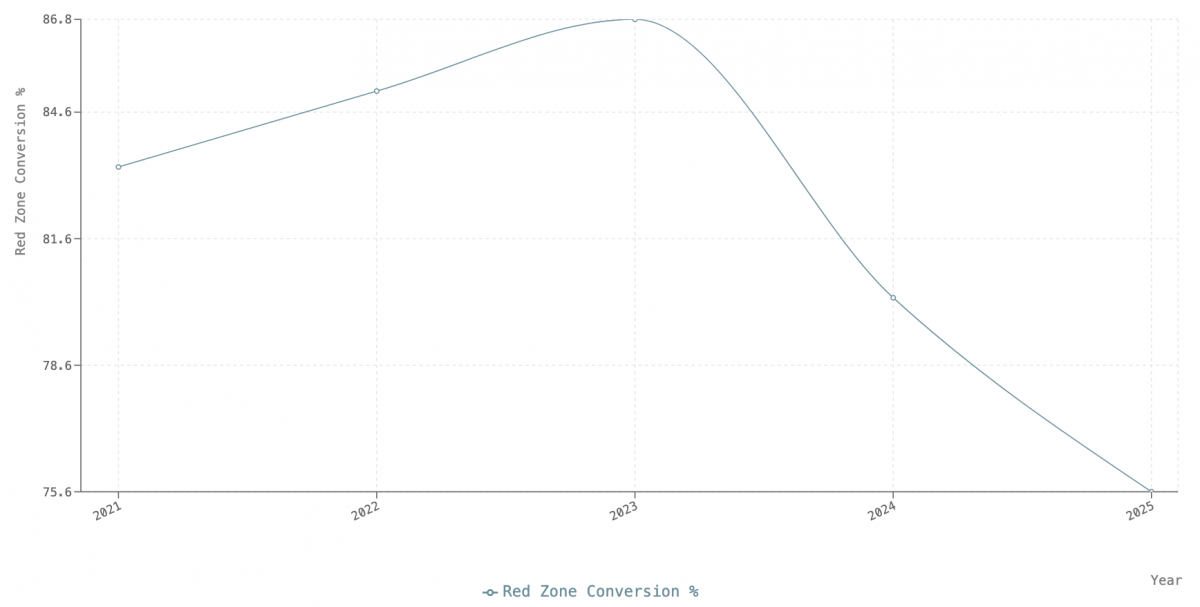
The DMV area was the epicenter of the modern “smallball” scheme, and the Breeze reflected that for years as a perennial top three team in red zone execution. But starting in 2024 something came apart for DC in special teams scenarios—maybe a lack of a definable WR1 target, maybe just too many short range throws that could lead to blocks or mistakes, maybe no Darryl Stanley at the helm—and their normally fiber-optic cable connection splintered into self inflicted mistakes and missed chances. This all culminated in the Breeze finishing 17th in 2025 with a red zone conversion rate of 75.7 percent, the lowest mark for a playoff team over the past two seasons and the second lowest since the start of 2021.
One Big Team Stat: How high have the expectations gotten for DC’s passing excellence? The Breeze have ranked in the top four in the UFA in fewest turnovers per game in each of the past five seasons, finishing third, second, second, fourth, and fourth since 2021, respectively.
Montreal Royal
Strength of schedule: 13th
Biggest bright spot: Tremblay-Joncas, Auger-Semmar, Bonnaud
Quentin Bonnaud remains one of the purest receiving talents the UFA has ever seen, Christophe Tremblay-Joncas has evolved into an all-around force with or without the frisbee, and now Malik Auger-Semmar returns to the lineup as a Worlds-caliber hybrid. It’s been one of the toughest tasks each preseason to prognosticate exactly how the Royal will fare; Montreal hasn’t sniffed the playoff since 2017. But the offensive engine has undeniable firepower, and they could put a lot of defenses on their heels in the coming months.

Biggest question: Can the Royal approach a .500 record on the road?
Just in the past two seasons at Claude Robillard, Montreal has earned home wins against the three beasts of the East in Boston, DC and New York. But when the Royal hit the road, things tend to fall apart. Badly. In fact, since the start of 2023, Les Bois are just 2-16 as an away team, and suffered losses by eight, 10, and 12 goal margins just in 2025 alone.
One Big Team Stat: Montreal’s seven-season absence from the postseason is the longest active streak in the association.
Three big games to watch: May 9 at Toronto, May 16 vs Boston, June 6 vs New York
New York Empire
Strength of schedule: 11th
Biggest bright spot: Consistent offensive excellence
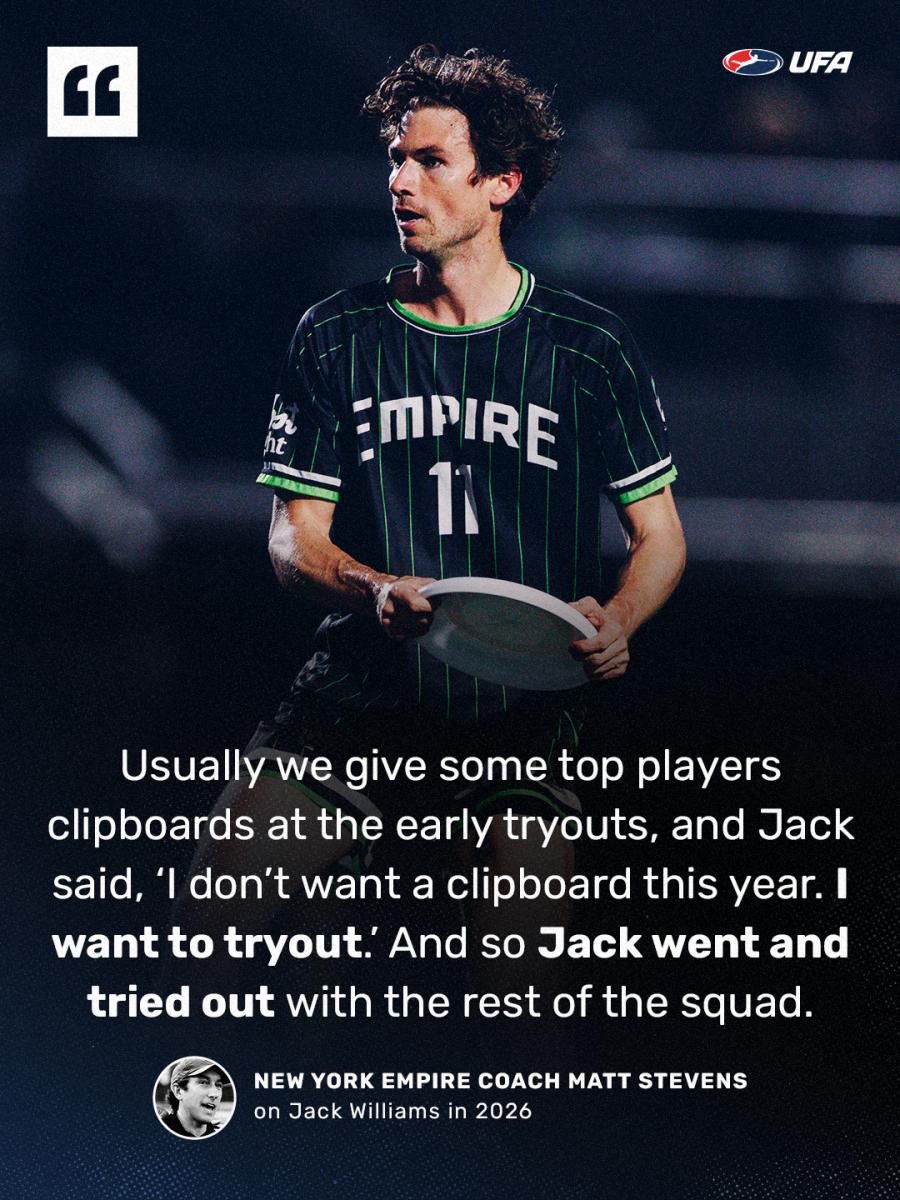
It’s hard to get the taste out after New York ended last season with their worst offensive performance since 2018, but this is a perennial top-five O-line with two new superstars. Jack Williams is still the fulcrum on which everything rests, and he could crack the 4,000 career completion mark this season, a club with just two members currently. And the 33-year-old Ben Jagt isn’t past his prime yet, trading explosiveness for efficiency and finishing third in the UFA in goals last season.
Biggest question: Will this Empire team generate blocks?
Throughout the Empire’s dynastic run from 2019-2023, their defense was amongst the most formidable in the league, with Antoine Davis taking home “Defensive Player Of The Year” honors following the franchise’s last title. Last year, however, New York tumbled to the bottom half of the league in takeaways, and had seven or fewer blocks in three of their final six games. The presences of Atkins and De Marrée could mean a shift back to D-line for 2023 All Defense First Team selection John Randolph, a natural in coverage and a gamechanger in transition.
One Big Team Stat: After registering just six 20-plus turnover games from the 2021-2024 (58 games), the Empire had three in 13 outings in 2025.
Three big games to watch: May 10 (Friday Night Frisbee, special Sunday edition), June 5 at Boston (Friday Night Frisbee), July 10 at Chicago (Friday Night Frisbee)
Philadelphia Phoenix
Strength of schedule: 10th
Biggest bright spot: Scott Heyman’s star power
The 24-year-old speed demon showcased his full potential last year as a fifth year pro, and was one of just 10 players in 2025 to register at least 3,000 throwing yards and 2,000 receiving yards. Heyman’s legs often set up his expanding and dynamic throwing repertoire, making him a threat from anywhere on the field, as evidenced by his 6.2 scores per game (sixth overall in ‘25).
Biggest question: Can the Phoenix defense create more pressure?
Paul Owens and Jack Wisner can create turnovers in a lot of one-on-one matchups, but beyond them it's a big guess as to how Philly will handle opposing offenses. Last year, the Phoenix caused the fourth fewest turnovers per game in the UFA, which often yielded easy drives for their opponents. The East somehow feels even more talented in 2026, which could spell trouble for the Hot Birds.
One Big Team Stat: The Phoenix really struggled at the short end of the field in 2025, converting the fourth lowest red zone percentage (73 percent) while allowing the sixth highest (82 percent).
Three big games to watch: May 2 vs Toronto, May 30 vs Pittsburgh, July 11 at DC
Toronto Rush
Strength of schedule: 21st
Biggest bright spot: Soft schedule in a tough division
Following their season opener on the road in New York, the Rush have just one matchup apiece against the Empire, Glory, and Breeze for the rest of the year. Toronto’s remaining eight games consist of Montreal (three meetings) and Philadelphia, as well as a potpourri of interdivisional matchups with Pittsburgh, Oregon, Seattle, and the newly renovated Indianapolis. With a soft schedule and a hard start, Toronto could optimistically be in a position to go 3-1 by the time they host DC on May 29.
Biggest question: Can Toronto’s defense slow down scoring?
The Rush’s high tempo offense has produced a lot of highlights and shootouts in recent years, but their revolving-door defense has struggled to offer much resistance against many divisional opponents. Phil Turner is in range of becoming the franchise leader in blocks in 2026, but beyond the former All-Star, it remains to be seen who can step up on the Rush D-line.
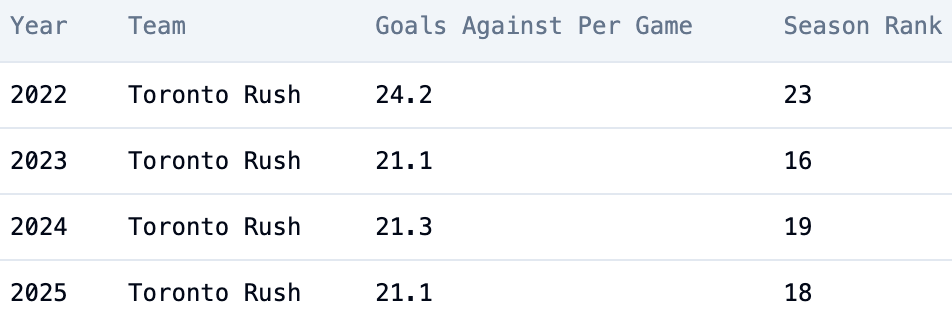
One Big Team Stat: Toronto tied with Oregon last year for the fewest defensive break scores per game (3.4).
Three big games to watch: May 2 at Philadelphia, June 20 at Seattle, July 18 vs Indianapolis
South Division
2025 playoff teams: Atlanta, Austin, San Diego
Last three division champions: Austin (2023), Carolina (2024), Atlanta (2025)
Last league champion: Carolina (2021)
2026 Favorite: Atlanta
2026 Wild Card: Austin
One Big Divisional Trait: Short field scenarios have been instrumental in recent years, and that trend has taken particular effect in the South where four different teams rank in the league’s top 10 in red zone efficiency. Atlanta has finished top two in the UFA in each of the past two seasons, and their 14-for-14 performance in 2025 sealed their first divisional title.
One Big Storyline: No division has enjoyed as much parity at the top end of its standings since 2021 as the South. Three different division champs in as many seasons, and a hard-charging San Diego squad that could make it a fourth in 2026; don’t forget, the Growlers were within one goal of Atlanta with under nine minutes remaining in the game in last August’s divisional finale. This year could simply come down to who can secure home field advantage, and avoid what is sure to be a bruising first round battle come late July.
Atlanta Hustle
Strength of schedule: 19th
Biggest bright spot: Offensive balance
Whether from long range attacks or short field precision, this Hustle offense can hurt opponents in a variety of ways. Atlanta finished third in team huck percentage (75 percent) and second in red zone efficiency (84 percent), while leading the league in fewest turnovers per game for the second straight season. Brett Hulsmeyer is big, Austin Taylor and Adam Miller can blast it, Hayden Austin-Knab is better year-over-year, Christian Olsen and Jeremy Langdon are as efficient as ever, and the downfield duo of Alec Wilson Holliday and new acquisition Will Selfridge are going to terrorize defenses with their attack speed.
Biggest question: Is the Hustle defense elite?
Despite the divisional title in 2025, there were some signs that Atlanta’s defense had some gaps, namely their 18th ranked blocks per game number (8.5). But now with starters Franky Fernandez, Michael Fairley, and 2025 All Defense Second Team selection Tyler Randall off the roster, there could be further regression for a team that was top five in breaks as recently as 2023. Lukas McClamrock can muck up almost any backfield, but who else will emerge to create pressure in the lanes?
One Big Team Stat: Continuing from the last blurb, Atlanta’s breaks per game mark has fallen nearly two scores over the past two seasons from 7.9 to 6.1. Of note: The Hustle lost by two to Minnesota in last year’s semifinals, and converted just 6-of-13 (46 percent) break opportunities in the game.
Three big games to watch: May 9 at San Diego, May 23 at Carolina (Friday Night Frisbee, special Saturday edition), July 18 at DC
Austin Sol
Strength of schedule: 22nd (Easiest)
Biggest bright spot: A little bit of everything
You want offense? Brothers Kyle Henke and Mark Henke collected 116 scores and over 6,500 yards combined last year, while Eric Brodbeck, Myles Armstrong, Jackson Potts, and Joey Wylie all finished with 40 scores apiece. Need turnovers on defense? Owen Johnson and Noah Powell are two of the fastest A-to-B gap closers in the South Division, while veterans Matthew Armour and the league’s all-time blocks leader Ryan Drost are certified ball hawks. Austin can create leverage on many different matchups, and they’re going to be hard to gameplan against for any opponent.
Biggest question: Who is hucking it?
Only the gunshy Breeze (4.6) completed fewer hucks per game in 2025 than the Sol (5.9), and that was before three of Austin’s top five deep throwers departed. Duncan Fitzgerald is back on the team after a year hiatus, and is a 67 percent career hucker. But beyond him and the elder Henke, the Sol could struggle to stretch the field.
One Big Team Stat: The Sol had 10 or more blocks in five of their first seven games last season (6-1 record), before registering just one such performance in their final six contests, including just six takeaways in their first round home playoff loss to San Diego.
Three big games to watch: April 25 vs Atlanta, May 31 vs Seattle, June 5 at San Diego
Carolina Flyers
Strength of schedule: 18th
Biggest bright spot: The one-two offensive punch of Allan Laviolette and Jacob Fairfax
A generational thrower-to-receiver duo, there’s few things more simple and effective than Laviolette airing it out to Fairfax in isolation. The field-stretching threat of their connection opens up everything in the Flyers offense, and that vertical dimension creates ample space for Grayson Sanner, Terrence Mitchell, and other attackers to operate. Fairfax could leap into the league’s top five all time in goals in 2026, while the 36-year-old Laviolette is playing the best frisbee of his career after returning from what could have been a career-ending injury in 2022; Laviolette has the second most assists over the past two seasons with 125.
Biggest question: Can Carolina avoid another slow start before the collegiate cavalry arrives?
The Flyers broke their league-record nine season playoff streak last year largely because of a much-maligned 0-4 start to the season. They won seven of their final eight games and had a top four offense, but it was too little too late. College studs Tobias Brooks, Zeke Thoreson, and rookie Josh Singleton could transform this roster into a championship contender by the end of May, but that’s if the Flyers can manage their first five games, starting with Friday’s free frisbee showcase in San Diego.
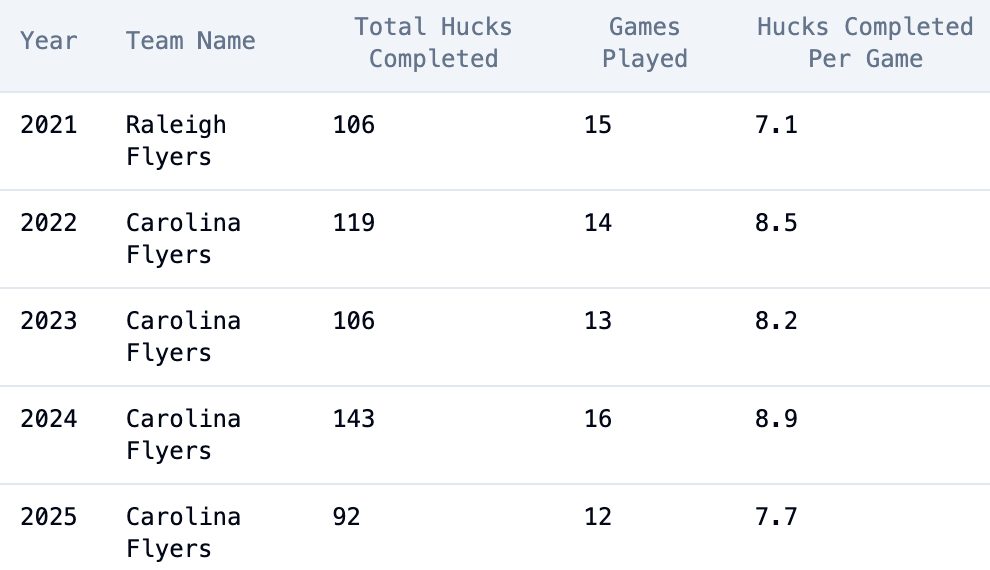
One Big Team Stat: No team has completed more hucks than the Flyers since the stat began in 2021, and only four teams have a higher completion rate than Carolina’s mark of 64 percent.
Three big games to watch: April 24 at San Diego (Friday Night Frisbee), June 5 at DC, June 26 vs Atlanta
Houston Havoc
Strength of schedule: 12th
Biggest bright spot: Size
Colorado learned this the hard way last May, but Houston has a lot of height and meat in their ranks. What this team lacks in speed they make up for in positioning, and there’s some evidence that they could be effective inside the red zone with more consistency; Houston had five games last season where they scored 10 or more times inside the red zone at an 80 percent clip or better. The Havoc still lack some refinement when it comes to passing precision, but they’re on the verge of getting beneath 20 turnovers a game for the first time in franchise history.
Biggest question: Who is shouldering the throwing load on offense alongside Jimmy Zuraw?
The former Havoc offensive system relied on a spread, almost West Coast style offense that de-emphasized any individual thrower beyond Zuraw, and constantly looked to keep the disc moving over targeting specific receivers. The results were largely mixed. With a new plan in place for 2026, will Houston simplify their system and keep the disc in the hands of primary throwers more?
One Big Team Stat: Houston finished dead last in blocks per game (7.1) last season, almost a full block per game less than the second worst team.
Three big games to watch: May 2 vs Austin, May 15 vs Vegas, May 30 vs Seattle
San Diego Growlers
Strength of schedule: 20th
Biggest bright spot: Continuation attack
The true dark horse contender in the 2026 landscape, what the Growlers lack in backfield anchors/traditional throwers they more than make up for in mobile, hybrid scorers. Travis Dunn is one of just three players ever to notch 700 career scores, Khalif El-Salaam can take over any game for stretches at a time as a thrower or a receiver, Marcel Osborne is one of the most productive midrange players in the UFA, while KJ Koo, Daniel Brunker, Matt Miller, and 2025 rookie standout Jonathan Lyle can all get buckets. San Diego is deep and fast at the skill positions, even if they lack some height, and they could outpace a lot of defenses in 2026.
Biggest question: Can the Growlers consistently win close games against playoff level competition?
Other than their double overtime nailbiter against the Flyers last year, the Growlers tended to show their flaws at inopportune times, going 2-5 in games decided by four goals or fewer. Coincidentally enough, San Diego generated single digit takeaways in four of those losses; the Growlers finished with just four blocks against Atlanta in last August’s South finale, and allowed seven goals in the fourth quarter because of an inability to get stops.
One Big Team Stat: Opponents had the second worst red zone conversion rate in the UFA last season against the Growlers (73 percent). In their first round playoff win in Austin, San Diego forced six red zone turnovers by the Sol.
Three big games to watch: April 24 vs Carolina (Friday Night Frisbee), May 9 vs Atlanta, June 19 at Austin
Vegas Bighorns
Strength of schedule: 6th
Biggest bright spot: Year One in the rearview mirror
The learning curve in this league is no joke, and Vegas is still adapting as they search for their first win. The Bighorns did show some punch by putting up at least eight blocks in nine of their final 10 games of 2025.
Biggest question: Who is anchoring the offensive attack?
Even if they were on the far side of their primes, league vets Ryan Hiser, Alec Benton, and Stephen Poulos brought some experience to last year’s inaugural campaign. But with all three throwers absent from this year’s Bighorns roster, it will be up to one of the league’s youngest lineups to unearth new passers.
One Big Team Stat: The Bighorns led the league with the most turnovers per game (30), which included 23 or more mistakes in 11 of their 12 outings.
Three big games to watch: April 25 vs Carolina, June 13 vs Minnesota, June 26 vs Houston
West Division
2025 playoff teams: Salt Lake, Oakland, Colorado
Last three division champions: Salt Lake (2023), Seattle (2024), Salt Lake (2025)
Last league champion: San Francisco (2017)
2026 Favorite: Salt Lake/Oakland
2026 Wild Card: Seattle
One Big Divisional Trait: No region loves the longball like the West. In 2025 there were six teams that averaged more than eight huck completions per game, which included all five franchises on the left coast, as well as the top three spots overall.
One Big Storyline: Salt Lake has never lost to Oakland since their inception in 2022. That may change this season as Oakland is looking like the most talented roster in the league, top to bottom. The Shred have owned the Spiders in special teams and crunchtime scenarios, and their home field advantage in front of the Shred Heads during the playoffs is second to none.
Colorado Apex
Strength of schedule: 7th
Biggest bright spot: Developing for the future
This might sound backhanded, but it really is not. For the past two seasons or so, Colorado has been caught in the undesirable place between lofty expectations and rugged reality, with a roster that skewed either a little too young or a little beyond their prime. Now with a full franchise reset as the Apex, this squad can take the time to find good roles for their personnel. Quinn Finer is as explosive and precise as ever, and team captain Seth Faris continues to find new ways to make himself a standout on the field; before last year, Faris played all of 37 points on offense in his first three pro seasons, and then led the Apex in goals (39) in 2025.
Biggest question: Can Colorado still hang with the top teams in the division and be a playoff team?
It’s been nearly four years since the Apex won a playoff game during their inaugural season, and it’s hard to deny the feelings of entropy since. Salt Lake has taken command of the Shred-Apex rivalry over the past few years, and Oakland formally leapfrogged Colorado with their 23-14 demolition in the first round of last year’s playoffs. The Apex still hold a 7-1 all-time record against the Cascades, and will need to hold that edge firmly if they want to make it back to the playoffs.
One Big Team Stat: Despite finishing third in team break rate last year, the Apex had two different games (July 4 vs. Salt Lake, July 26 vs Oakland) where they managed just one break score.
Three big games to watch: May 9 vs Salt Lake, May 16 vs New York, July 3 vs Seattle
Oakland Spiders
Strength of schedule: 3rd
Biggest bright spot: Most talented roster in the league
There’s throwing and speed everywhere you look on this Spiders team. The offense played like a top four unit in 2025 in their first season together, and the defense could have an even higher ceiling given their age and depth. Walker Frankenberg and Evan Magsig are perennially two of the best producers in the bigs, and they’re still nowhere near 30. They have a whole starting line of u24 talent that could make any other team weep, and that does not even consider their two best young stars Raekwon Adkins and Dexter Clyburn. I mean: Mac Hecht is a practice player, for crying out loud!
Biggest question: Are the Spiders ready?
Oakland was attacking in transition on defense and up big on the road in what looked like an upset in Salt Lake in last summer’s West Division final, before seven of their eight legs came off in the second half and the Shred exposed the Spiders’ poor special teams play. This team has the horses to run any opponent off the field in open space, but Oakland has yet to master the kinds of situational frisbee that make champions in this league. For my money, the June 12 Spiders versus Wind Chill matchup on “Friday Night Frisbee” could be the game of the year, and a big evaluation for the title prospects of two frontrunners.
One Big Team Stat: In just their final two games of the season, the Spiders committed a total of 16 turnovers inside the red zone alone. For comparison, that’s more red zone mistakes than the league leading team (New York) had across seven games combined.
Three big games to watch: May 2 vs Salt Lake, May 30 vs San Diego, June 12 vs Minnesota (Friday Night Frisbee)
Oregon Steel
Strength of schedule: 5th
Biggest bright spot: Throwing power
Only Jake Felton averages more huck completions per start in league history than Ben Thoennes*, and Steel teammate David Barram isn’t too far behind. Felix Moren is back on the roster, giving a certifiable WR1 target downfield. Oregon must find some kind of attack balance if they want to become competitive—the Steel were 22nd in red zone efficiency in 2025—but their haymakers pack quite the wallop.
* Minimum two games played since 2021
Biggest question: Can the Steel win their regional rivalry over Seattle and enter the playoff conversation?
Last year’s mid-May triumph over the reigning division champion Cascades gave the rebranded Steel their first taste of relevancy in several hundred days. Oregon couldn’t quite recapture that energy the rest of the season, only managing victories against Vegas for the remainder of their 2025 schedule. But if the Steel can win the season series against their Pacific Northwest rivals, they could enter a wide open race for the third playoff spot in the West.
One Big Team Stat: The Steel had just two games out of 12 where they finished with a 50 percent offensive success rate or better, and ranked 21st overall for the season.
Three big games to watch: May 3 vs Colorado, May 15 vs Seattle, June 19 vs Toronto
Salt Lake Shred
Strength of schedule: 14th
Biggest bright spot: Team speed and conditioning
The pace and physicality that the Shred play with has allowed this franchise to win more regular season games than any other team since 2022. It starts with Second Team All-UFA selection Chad Yorgason and his coverage-beating footspeed, but there’s a kind of spring-loaded quality to the entire Salt Lake attack, and on both lines. Matt Russnogle and Jace Duennebeil love to drag defenders into deep waters on vertical routes, and the D-line has been one of the most dangerous and quick-striking teams off turnovers in transition for years.
Biggest question: Can the Shred slow it down?
There can be a downside to the Shred’s frenetic style of play, as the quick points and high-scoring atmosphere can allow opponents to get into rhythm. Salt Lake allowed the third most huck completions to opponents per game in 2025, and that inability to contain the longball can allow for too many explosive plays; in one of the forgotten games of the season, Seattle nearly beat the Shred for the second straight time at home by going 11-for-12 from deep last May; Salt Lake has never lost back-to-back home games.
One Big Team Stat: It is exceedingly hard to generate blocks against the Shred. The team has finished top five in fewest blocks allowed in each of the past three seasons, and led the league in 2025 (6.4 blocks allowed per game).
Three big games to watch: May 2 at Oakland, June 19 at Minnesota (Friday Night Frisbee), July 4 vs Seattle
Seattle Cascades
Strength of schedule: 16th
Biggest bright spot: Huck happy opportunists
The Pacific coast is known for its rain, and in 2025 the Cascades became the first franchise to lead the league in both team huck completion percentage (75.9 percent) and hucks per game (9.2). Christian Foster may no longer be on the roster, but there’s still plenty of big arms and green lights to find someone, anyone downfield. And give credit to downfield playmakers Garrett Martin, Zeppelin Raunig, and emerging star Conor Belfield for seemingly always coming down with 50/50 plays in traffic.
Biggest question: Can the Cascades execute in the short field?
The flipside of the ‘Scades love of the longball is that they finished in the bottom half of the league in red zone conversions. The personnel and skills are there to be effective—they finished third in 2024 when they won the division—but there’s often loose timing and poor spacing. Lackluster red zone performance was the primary factor in their early season loss at Oregon, where the Cascades converted just 16-of-25 (64 percent) of their red zone chances.
One Big Team Stat: Seattle completed 90 percent or better on their huck attempts in five of their 12 games last year.
Three big games to watch: May 2 vs Colorado, May 31 at Austin, June 20 vs Toronto